*Disclosure: This article is general education, not legal or financial advice. Credit repair can't remove accurate, timely information, results vary by file, and you can dispute errors with the credit bureaus yourself at no cost.*
Having a strong credit profile is an essential part of life in our society. Credit scores are extremely commonplace in all lending institutions and are vital in judging creditworthiness. These scores can be used for things such as employment and rental approvals. With that said, the following article helps readers understand the key differences between debt consolidation and credit repair. Both can be important, however, reading this article will give you a better understanding of when it is more appropriate to use one service over the other.
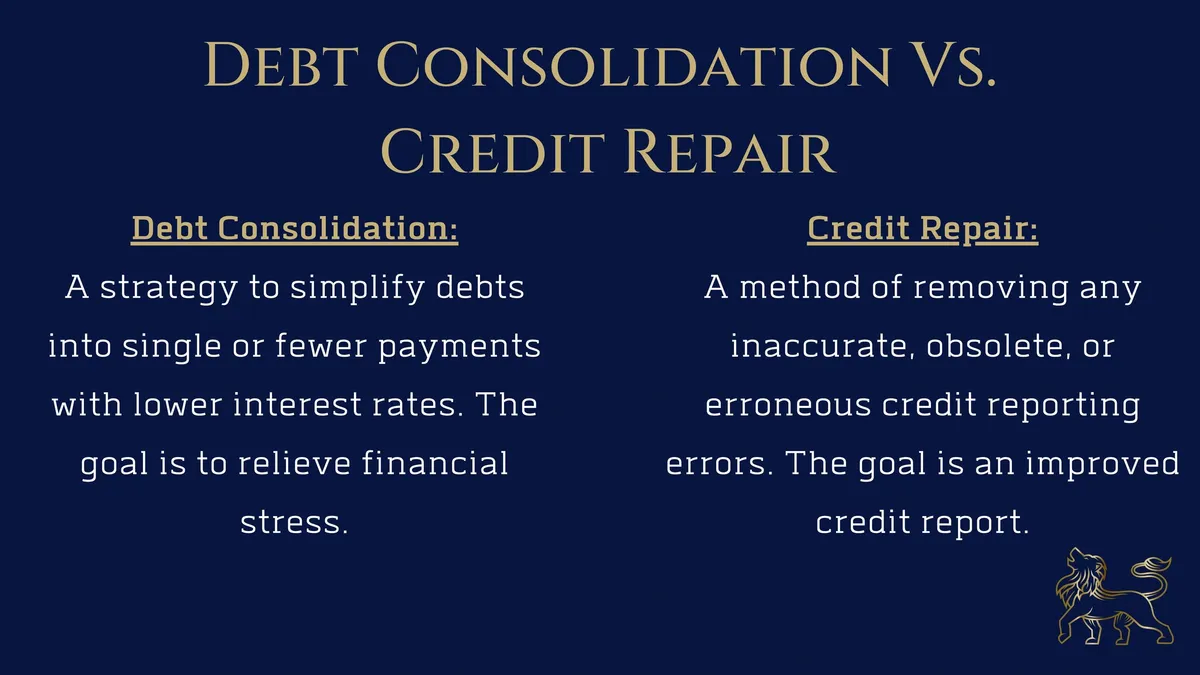
In general, when someone is struggling to juggle several debts with a variety of statement dates and varying interest rates, a debt consolidation company would be a great solution. Meanwhile, when someone is looking to prioritize their credit and remove any inaccurate, obsolete, or erroneous information from their credit report, a credit repair company would be a great match.
For those wishing to raise their credit score, debt consolidation as well as credit restoration may be beneficial. But given that credit repair and debt consolidation are best used in different circumstances, knowing when to use each strategy might be useful.
In general, consolidating your debts can help if you have a number of obligations with various interest rates and payment terms. You might be able to simplify your payments and save money by merging your debts into one with a lower interest rate.
On the other hand, those who want to clear up errors in their credit reports and make sure they have an accurate credit report will benefit the most from credit repair. To help with both short- and long-term credit improvement, some credit repair businesses can provide legal assistance and credit counseling.
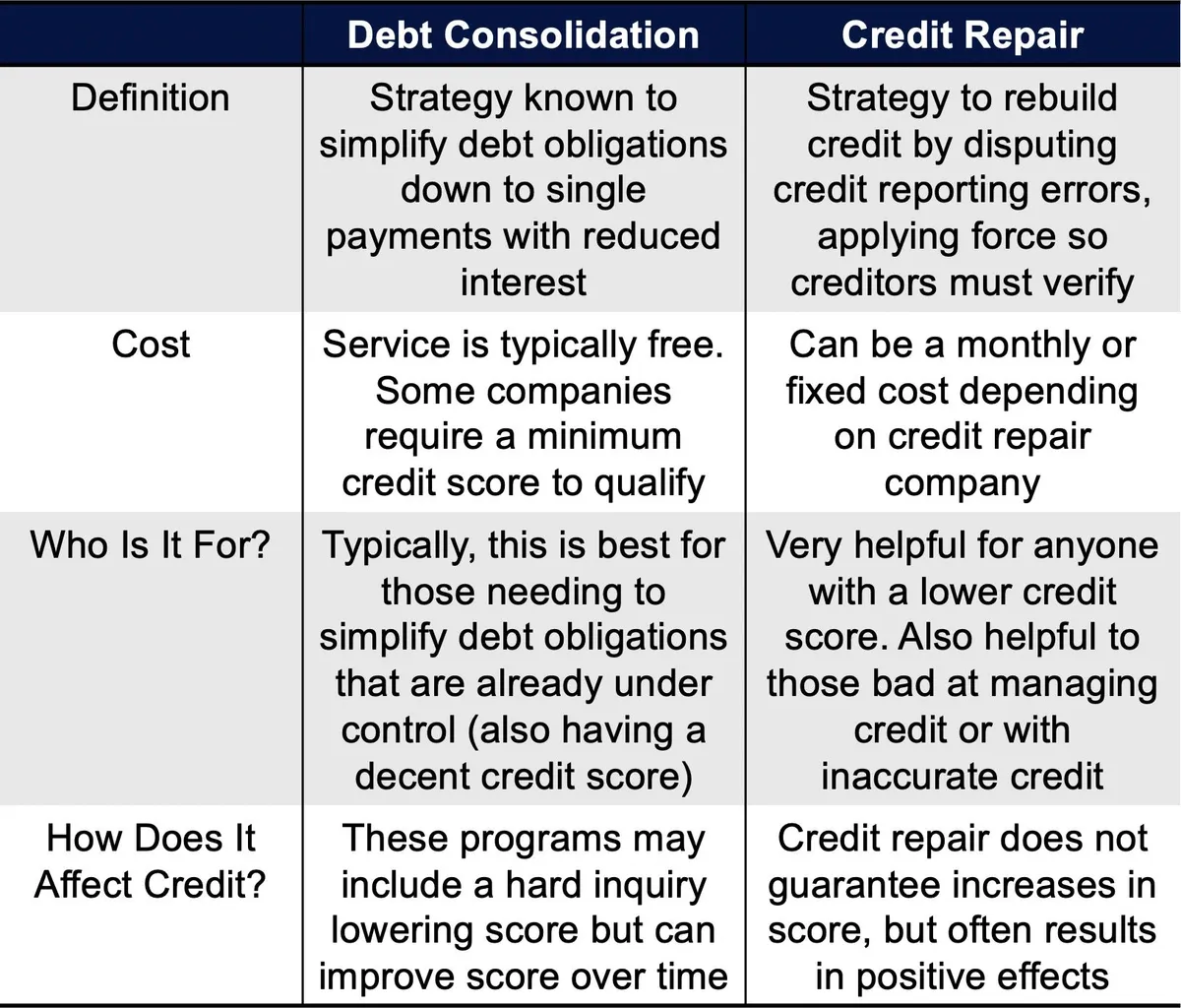
Keep the following distinctions in mind as you decide whether debt consolidation or credit repair is best for you:
How Does The Debt Consolidation Process Work?
Through debt consolidation, you can combine several loans into one, which may result in easier payments or a cheaper interest rate. For instance, you might be able to merge various credit card debts to make it simpler to keep track of your debt.
If you're thinking about consolidating your debts, weigh your options, the impact on your credit score, and whether or not it will end up saving you money in the long run.
Different Debt Consolidation Options:
You typically have two alternatives for consolidating your debts: a debt consolidation loan or a balance transfer credit card.
- Debt Consolidation Loans are a sort of personal loan that combine various debts including credit card debt, medical debt, and other loans.
- Balance Transfer Credit Cards are credit cards that let you transfer various debts directly onto the card known as balance transfer cards. Some credit cards offer a promotional 0% interest rate, which indicates that paying off your debt during the promotional period could result in financial savings.
Although it can be possible to secure a debt consolidation loan with a lower credit score if you look for specific lenders or put up an asset as collateral for the loan, debt consolidation is typically easier to obtain if you already have strong credit.
What Are The Effects Of Debt Consolidation On Your Credit Score?
Due to the hard inquiry that must be made on your credit record to obtain the loan or balance transfer card, debt consolidation can initially cause a reduction in your credit score.
However, the total impact on your score is likely to be favorable over time if debt consolidation makes it possible for you to make future payments on schedule.
Can Debt Consolidation Save You Money?
It's critical to consider the loan's interest rate and term when considering whether to combine your debt in order to ascertain whether you would save money.
For instance, your debt consolidation loan can have a longer duration but a cheaper interest rate. Request from the lender a breakdown of the total cost of the loan throughout its entire period, including interest payments. In this manner, you may determine whether the loan really does save you money.
You should also confirm that you can repay the new loan in regular installments. Failure to make payments on your consolidated debt could result in a collection account, which would lower your credit score and ultimately cost you more money.
Specifically, if you have been struggling with your credit, you may want to look into debt consolidation alternatives such as credit repair.
How Does The Credit Repair Process Work?
Reviewing your credit report and challenging erroneous information is the process of credit repair. While it is legal for anybody to repair their credit on their own, it is frequently beneficial to engage with a credit repair business with experience who knows what to look for and how to interact with lenders and the three major credit bureaus.
Here are the three main things to understand about credit repair:
- Review of your credit report, and the beginning of the dispute process on inaccurate information
- This process can be done alone, however, it is more streamlined and efficient with a credit repair company such as The Credit Lion
- Credit repair may help your credit score over time by cleaning up your credit report
Consider what credit repair can and cannot do when deciding whether to begin the process, as well as what impact it can have on your credit score. You should also decide whether you want to repair your credit on your own or with the help of a professional credit repair company.
How Can Credit Repair Help You?
You might find inaccurate negative items on your credit report and challenge them with the use of the credit repair process. For instance, inaccurate balances, fake accounts created as a result of identity theft, or other errors on your credit report could be unfairly lowering your score. The elimination of these things as a result of your dispute may raise your overall score.
However, keep in mind that credit restoration normally does not entail erasing truthful information from your account or eliminating debt. Additionally, there is no assurance that credit repair will raise your credit score. If you're thinking about using a credit repair company, be on the lookout for fraudsters or shady businesses that make exaggerated promises of success.
Can You Repair Your Own Credit?
Anyone can attempt to improve their credit by reading their credit report, getting in touch with creditors, and disputing information with the three credit agencies. Despite this, the procedure can occasionally be complicated and time-consuming. Because of this, many consumers decide to engage with a credit repair business.
Working with a professional business has the following advantages:
- Assistance from a team of credit specialists with experience and knowledge in credit repair
- An examination of your credit report by a professional
- Possibility for you to concentrate on your personal credit practices while advisers contact the credit bureaus on your behalf
If you're unsure whether to engage with a reputable credit repair business, schedule a credit consultation with The Credit Lion so you can talk about your needs and look over your possibilities.
What Are The Effects Of Credit Repair On Your Credit Score?
Credit repair frequently has a favorable impact, yet it is not a certainty that it will raise your score. Checking your credit report and disputing errors with the credit agencies are additional acts related to credit repair that typically have no impact on scores. However, if your score is adversely impacted, take note that this should only last while the issue is resolved.
If credit repair is effective, it might raise your score by deleting erroneous information from your report that might be affecting it negatively.
The Million Dollar Question... Debt Consolidation or Credit Repair?
Overall, those who want to manage their credit might benefit from both debt consolidation and credit restoration.
- Debt consolidation might be a smart option for you if you have an excellent credit score and wish to possibly simplify your payments, lower your interest rate, or modify the term of your loan.
- Credit repair is probably a wise choice if you have a low credit score or are aware of false or fraudulent material on your credit report.
The best option for managing your debt will ultimately depend on your particular situation. To decide the best course of action, seek advice from an expert, such as your financial advisor.
If you've determined that credit repair would be advantageous for you, consulting with our credit specialists at The Credit Lion can help you choose the best course of action.