*Disclosure: This article is general education, not legal or financial advice. Credit repair can't remove accurate, timely information, results vary by file, and you can dispute errors with the credit bureaus yourself at no cost.*
Having a strong credit profile is an essential part of life in our society. Credit scores are extremely commonplace in all lending institutions and are vital in judging creditworthiness. These scores can be used for things such as employment and rental approvals. With that said, the following article helps readers understand how they can approach credit reporting errors related to COVID-19. Depending on the error, it can adversely affect credit scoring, so this article is quite an important read for anyone interested in the credit repair space.
The COVID-19 epidemic totally changed the lives of a significant number of people, having an adverse effect on their physical and mental health as well as their goals and finances. Over 40% of American individuals said that they or a family member had lost a job or income since the pandemic began. Nearly half (49 percent) of the workers who have reported a salary drop since February 2020 claim they are still making less money than they were prior to the pandemic.
Unfortunately, these detrimental financial repercussions extended to many people's credit records. A person's credit is often impacted when they lose their employment or a portion of their salary. Other repercussions such as loan application denials and more may result from this.
If you notice your credit score declining, always examine the reasoning behind it. More than one-third of Americans' credit reports contain at least one inaccuracy. Additionally, the pandemic has increased the possibility of errors because many credit reporting standards were altered to help people in these difficult times.
Continue reading to learn more about these inaccuracies' causes, how to spot them on your credit report, and how to correct them.
A Rise In CFPB Complaints About Inaccurate Credit Reporting
Since the beginning of the pandemic, complaints to the CFPB concerning inaccurate credit report information have steadily increased. The CFPB annual report states that from 2019 to 2020, complaints grew by 54%. A phrase connected to the pandemic was also reported in more than 3,000 complaints each month starting in April 2020.
Both the pandemic and the system's overall flaws can be held responsible for this sharp rise in errors and complaints. The current procedures in place make it difficult to handle errors. When attempting to dispute false information with the major credit reporting companies, many consumers find it frustrating to become bogged down in an unhelpful automated system, according to the CFPB research. Additionally, individuals who attempted to file disputes complained that even simple mistakes required too much time and money to fix.
Extenuating Circumstances Lead To Complicated Pandemic Accommodations
All the pandemic accommodations are one apparent factor contributing to the growth in credit report inaccuracies. These provisions were made in order to aid consumers in controlling their finances and credit during such trying times.
In order to reduce the financial stress that consumers were experiencing, some concessions were made to the regulations for federal and commercial lenders. Forbearance on federally guaranteed mortgages and student loans, private lender deferment possibilities, and modifications to the regulations governing negative reporting are a few examples.
Unfortunately, the number of mistakes grew as a result of these new, frequently fluctuating accommodations. For instance, the CARES Act permitted people to choose to opt into mortgage forbearance without paying fines. Lenders, however, found it difficult to swiftly react to these new circumstances.
For instance, Wells Fargo Bank encountered difficulties when attempting to adopt some concessions. Because the firm decided to apply a blanket forbearance to all mortgages, those who continued making their payments (and never opted into forbearance) continued to see a COVID mark on their mortgage loans. Even though they were still making their mortgage payments in many of these instances, people actually noticed a decline in their credit scores.
This is only one illustration of how lenders struggled to keep up with pandemic accommodations, leading to credit problems that further harmed the same individuals the accommodations were designed to safeguard.
Why Are Credit Reporting Errors So Important?
Credit report errors should never be disregarded. Your everyday life can be greatly impacted by your credit reports, and mistakes on your reports could be harming your credit. A low credit score might cost you money since it can result in you being given credit at inferior terms and higher interest rates.
A low credit score might also result in you being turned down for credit cards, loans, mortgages, auto loans, and other financial items. In addition to having an impact on your money, some employers and landlords also check credit scores, so having a low score could prevent you from getting a job or signing a lease.
In addition to all the possible negative effects, you should be concerned about credit report inaccuracies since they violate your legal rights. Every American consumer has a right to accurate credit reports under the Fair Credit Reporting Act (FCRA). You deserve to have a credit history that fairly reflects your borrowing behavior because your credit can impact so many different facets of your life.
The Best Ways To Check For Credit Reporting Errors
As required by the FCRA, users can typically only access each report for free once a year. However, during the pandemic, a change was made that now allows everyone to access their credit report for free every week through December 2022.
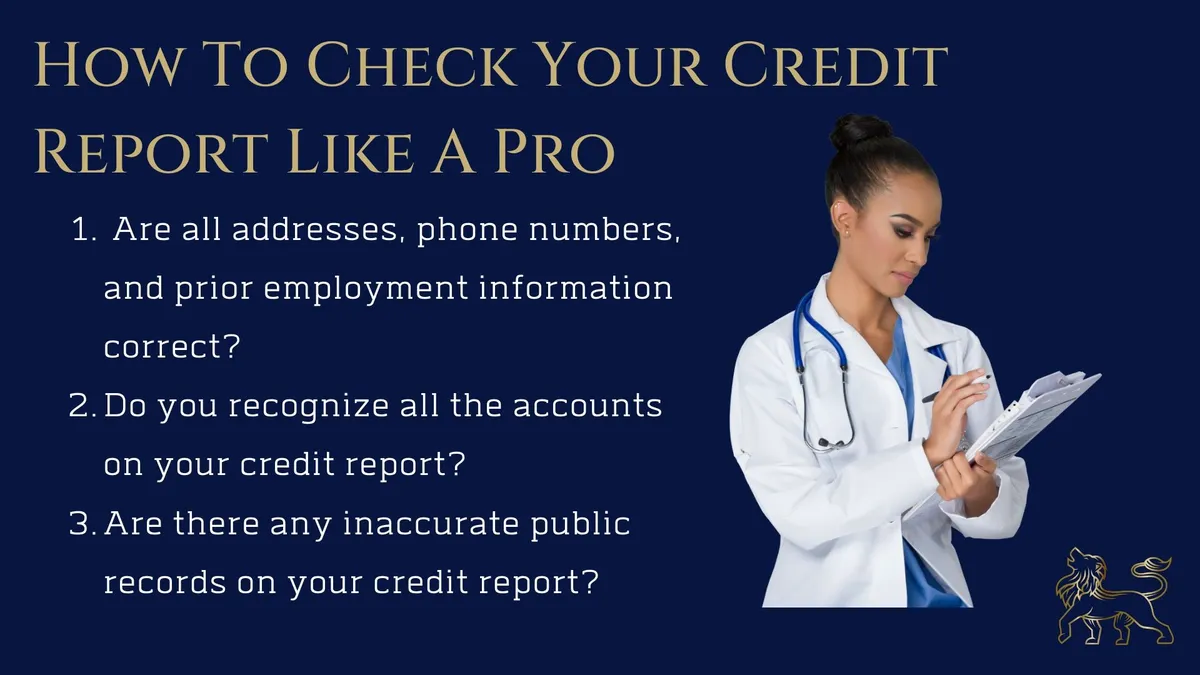
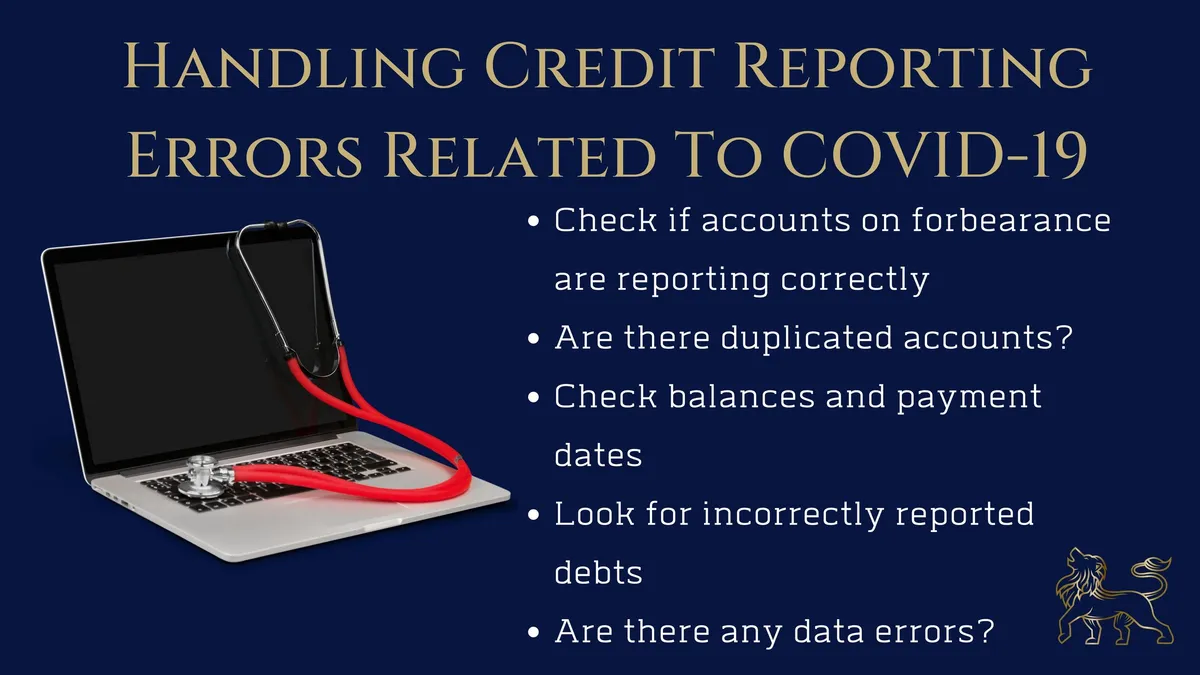
Watch for COVID-related errors when you view your credit report (in addition to standard errors). If you applied for any pandemic-related accommodations, make sure your report appropriately represents the accommodation. For instance, people who have benefited from the suspension of federal student loan payments shouldn't have any missed payments listed on their credit reports throughout the whole period of forbearance.
Other typical mistakes on credit reports include:
- Accounts that should be canceled but are still showing as open
- Current accounts that are listed as past due
- Duplicate accounts reporting
- Debts reported that are not yours
- Mistakes in data pertaining to accounts, addresses, dates, payment histories, etc.
To have a negative item on your credit report either erased or amended with accurate information, you can dispute any kind of error. This can be done on your own or with the help of a credit specialist such as the team at The Credit Lion.
What Can Be Done About Errors On Credit Reports?
If you discover inaccuracies on your credit reports, you might try contacting your lender and requesting them to correct the data they've sent to the credit bureaus. In the event that fails, you can approach the bureaus directly.
You can dispute an item with the credit bureaus by doing the following:
- Get a copy of your report and look for any errors.
- Send a dispute letter to all three credit bureaus (Equifax, Experian, and TransUnion) if your credit report contains an error. The letter should include specifics regarding the information that is incorrect, your arguments for why you think it is incorrect, and copies of any supporting documentation. Add a copy of your credit report that has the errors underlined as well.
- If there is a dispute form available from the credit agency you are writing to, fill it out and enclose it.
- Keep copies of all letters and communications related to disputes.
- To ensure that you have documentation that the credit bureau received your letter, send it by certified mail and pay for a return receipt.
- The credit bureau has 30 days from the date it received your claim to look into it (if they deem your dispute legitimate).
- The lender or creditor who provided the information will be contacted by the credit bureau and asked to confirm the information. The credit bureau will take the bad entry off of your credit record if the lender or creditor is unable to do so.
- If your dispute is allowed or rejected, the credit bureau is required to let you know. You will get a free new copy of your credit report if the dispute is successful and changes your credit score.
As you can clearly see, the dispute resolution procedure is drawn out and may seem impossible. Many consumers decide to engage the expert services of a credit repair organization because they lack the time and patience that is required when undertaking all this work. People can once again reap all the benefits of great credit with some help from our credit specialists at The Credit Lion. It is always important to know that no matter what is around the corner, even a national emergency, such as the COVID-19 pandemic, you can always take precautions to protect your credit. Let us show you how!