*Disclosure: This article is general education, not legal or financial advice. Credit repair can't remove accurate, timely information, results vary by file, and you can dispute errors with the credit bureaus yourself at no cost.*
Unemployment has been on the rise in recent years in the United States. How it affects your credit report is a question everyone should be asking. Credit scores are extremely commonplace in all lending institutions and are vital in judging creditworthiness. These scores can be used for things such as employment and rental approvals. Unemployment does not always directly affect your score, but it does give you a harder time with paying off obligations and getting new lines of credit. Being unemployed could cause your credit to go in a downward spiral, and this article can help ease that burden and inform you about potential issues that may arise.
What Does a Credit Report Show? Does It Show Employment Status?
It is vital to know what is reported on your credit report so that you focus on the important information when it comes to keeping your credit as clean as possible. The following information is reflected on your credit report:
- First and Last name, as well as any other names that you go/, went by
- Addresses, including current and any former ones
- Social Security Number (SSN)
- Phone numbers
- Current and prior employment
It is important to note that your credit report does not show your current employment status, but rather lists all your employers. In addition to the above personal information listed, your credit report also includes account history, types of credit you have had, such as loans or credit cards, open and close date for the accounts, as well as public records such as bankruptcies.
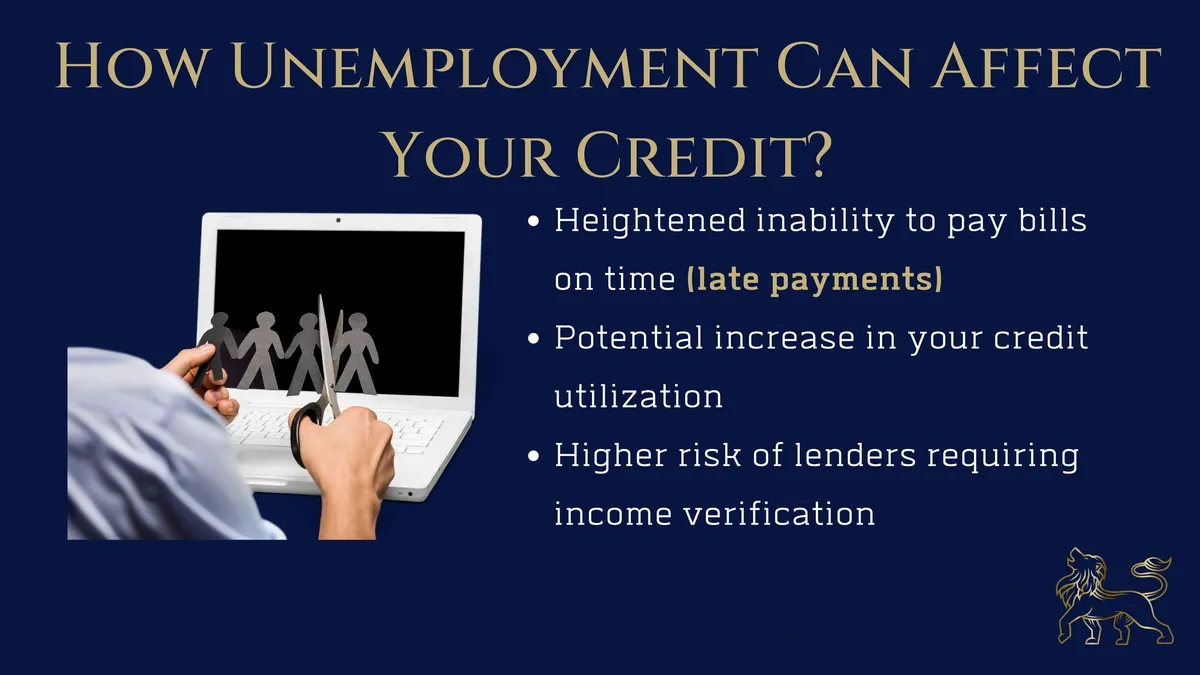
There is no information regarding your current or previous income on your credit report. Thus, being unemployed does not show up on your credit report either! Credit issuers cannot identify your employment status by simply looking at your credit report. However, unemployment often results in reduced ability to pay off existing debt, as well as late payments that may arise. This will evidently affect your score and leave a negative remark on your report.
How Will Unemployment Affect my Score?
Realistically, lenders do not have access to your employment status, as the bureaus do not report this information. However, if the lender you are dealing with has some suspicions regarding your report, they may ask about your employment status and look further into it. Simply put, being unemployed puts you at a greater risk of increasing your debt, as well as not paying off your current debt, which is seen as high-risk behavior by lenders.
Your Savings May be Drained
Being unemployed does not come easy, and neither is it free of cost. As a fact, it brings about great financial stress, and changes in spending/repayment habits in many cases. Therefore, it is important to have money saved up in a savings account, in case of not only for a rainy day but also for the sake of applying for new credit lines.
In some cases, creditors check your savings/checkings to make sure you have money in the bank to qualify you for a new credit line. The less money you have in the bank, the more of a risk you are in the eyes of the creditor since that could mean you are not able to make payments on your debt. This can be difficult during times of unemployment, therefore it is recommended to have some sort of savings as a safety net, to fall back on during hard times. Generally, a good rule of thumb is to have at least 5-6 months of living expenses saved up, in case unemployment knocks on your door, and you have to take some time to hone in on your skills to find a new job without hurting your credit or piling up debt.
Late/Missed Payments
Now in case of a situation where you are not able to save for a rainy day, and your budget shrinks due to unemployment, you may start making fewer and fewer payments on your cards, and start collecting late payments. This will affect your score, as payment history plays the biggest role in your report, making up about 35% of it! Even a few missed payments can drastically lower your score, so it is vital that you make the minimum monthly payments on your accounts.
If you are certain that you will not be able to make your scheduled monthly payment, make sure to contact the creditor as soon as possible as a measure of prevention. They will help you tackle this issue, and offer you options of how you can make the payment without incurring a late payment.
Higher Credit Utilization
When unemployed, it can be hard to track your spending habits, and draining your savings account may result in having to resort to credit cards as a form of payment. This will not only eventually result in late/missed payments, but will also drive up the utilization rate on your credit report!
Credit utilization is the percentage of given credit you use compared to your total credit limit. This affects about 30% of your credit report. The more you owe on your cards, the lower your score, and vice versa (for the most part). A good rate of credit utilization is under 30%, and an even better one is under 10%. This means that if you have a total credit limit of $10,000, it is good to only use $3,000 of it, and best to only use $1,000. In order to keep your credit utilization low, make a conscious effort to not overspend on your credit card, and use coupons and gift cards.
Unable to Qualify for Some Loans
Some lenders will not give out car or credit loans without checking employment status. Therefore, even though your credit may be up to par and in great shape, you may still not qualify for certain loans. Even though there are alternative mortgage options in the market, most home loans require employment status, and may therefore disqualify you for not being employed.
Protection of Your Credit While Unemployed
The tips and tricks above will help you keep your credit score safe in volatile/stressful times. Remember to always have some money saved in the bank account for a rainy day, in order to not miss any payments. If you are on the brink of having to incur a late payment, make sure to reach out to the creditor and make them aware of your situation, and ask for your options regarding the next payment. Finally, try to keep your credit utilization low, by not resorting to credit cards as the only method of payment and using coupons and gift cards where applicable. In case of any inaccurate information on your report that may pop up due to unemployment, the Credit Lion is here to help you remove these errors and get you in the best financial shape possible.